Air traffic control is a structured, layered system of airspace management, collision avoidance, weather coordination, and real-time decision-making that keeps aircraft separated and moving efficiently from gate to gate. This post breaks down how it actually works, who does what, and why it remains one of the most critical pillars of aviation safety.
The Core Function of Air Traffic Control
Most people assume air traffic control means someone on the ground is flying the plane remotely. That is not how it works. Controllers have three primary responsibilities: preventing collisions between aircraft, organizing the flow of air traffic efficiently, and providing pilots with the information and support they need to make good decisions. The pilot remains in command of the aircraft at all times. Controllers manage the environment around that aircraft.
Airspace is divided into controlled and uncontrolled categories. In controlled airspace, ATC is actively involved, and pilots must follow clearances. In uncontrolled airspace, pilots operate under their own navigation and separation responsibility. As a flight progresses from departure through cruise to landing, responsibility for that aircraft shifts between different ATC facilities in a carefully coordinated sequence.
The Different Types of Air Traffic Control Facilities
Air traffic control is not one facility with one group of controllers. It is a network of specialized facilities each responsible for a specific phase of flight.
Airport Control Towers
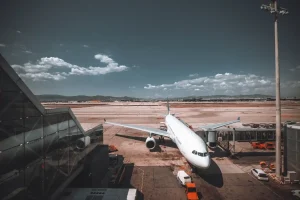
The tower is what most people picture when they think about air traffic control. Tower controllers manage aircraft on the ground and in the immediate airspace around the airport. Ground control handles taxiing movements on runways and taxiways. Local control handles aircraft in the air within the tower’s visual range.
TRACON: Terminal Radar Approach Control
Once an aircraft climbs beyond the tower’s immediate jurisdiction, it enters TRACON airspace. TRACON facilities manage the transition zone roughly between 5 and 50 miles from the airport and up to around 15,000 feet. Controllers here use radar to sequence arriving and departing aircraft and hand them off smoothly between the tower below and the en route center above.
Air Route Traffic Control Centers
En route centers, known as ARTCCs, manage aircraft at cruising altitude across large geographic sectors. A single center may cover hundreds of thousands of square miles of airspace divided into individual sectors, each worked by a team of controllers. Handoffs between sectors happen continuously as aircraft cross boundaries, and the coordination required to keep those transitions smooth and safe is built on years of procedural discipline and practiced communication.
How Controllers Separate Aircraft and Prevent Collisions
Separation is the technical core of what air traffic control does. Controllers manage three dimensions simultaneously: lateral separation, which is horizontal distance between aircraft on the same altitude; vertical separation, which uses altitude differences to keep aircraft apart; and longitudinal separation, which maintains distance between aircraft on the same route and altitude. The specific minimums applied depend on the airspace class, the equipment available, and whether radar surveillance is active. These standards are not the exact distances at which aircraft become unsafe. They are buffers designed to keep traffic well clear of actual risk.
When radar is not available, controllers rely on procedural separation using time and position reports. Radar environments allow tighter minimums because controllers have continuous real-time awareness of every aircraft’s position. Satellite-based surveillance through ADS-B is improving that awareness further by providing more accurate position data and faster update rates than traditional radar. As a last line of defense, TCAS operates independently of ATC and issues resolution advisories directly to flight crews when aircraft converge dangerously.
Communication Standards and Why Phraseology Matters
ATC communication is a standardized language, and that standardization is itself a safety tool. ICAO established global aviation English and specific phraseology requirements following a series of serious accidents where miscommunication between pilots and controllers was identified as a contributing factor. The structure of a standard transmission is deliberate: who you are calling, who you are, your position, and what you need. Every element of that format exists to reduce ambiguity when time pressure is high and frequency congestion is real.
Readback requirements exist because hearing a clearance and reading it back correctly are two different cognitive events. Controllers are required to correct any incomplete or incorrect readback rather than assuming the pilot understood. Expert controllers consistently describe phraseology discipline not as a formality but as the foundation of safe communication in a high-stakes environment.
Weather, NOTAMs, and Real-Time Information Management
Controllers do not just manage traffic in a static environment. They manage it in conditions that change constantly. Real-time meteorological data feeds into controller workstations, and when significant weather develops, controllers issue advisories, coordinate route deviations, and work with the Traffic Management Unit to adjust flow rates across the affected airspace. The TMU operates above individual controller actions, managing traffic at a systemic level to prevent demand from overwhelming capacity during weather events or airspace restrictions.
NOTAMs, which stands for Notices to Air Missions, communicate temporary information that affects routing and safety planning. These include airspace restrictions, equipment outages, runway closures, and hazard notifications. Controllers factor active NOTAMs into every clearance and routing decision.
Controller Training, Certification, and Workload Management
Becoming a certified air traffic controller is a long and demanding process. Initial training at facilities like the FAA Academy covers foundational radar, separation, and communication skills. That is followed by facility-specific on-the-job training where candidates must certify in each sector they will work. Washout rates are significant at every stage. The standards are high because the consequences of underperformance are severe. Controllers must also maintain currency on each certified position through regular working requirements, and recertification is required if currency lapses.
Workload management is built into how facilities are staffed and how sectors are configured. During high-traffic periods, sectors are split so each controller handles a smaller volume of aircraft. Mandatory rest requirements between shifts address the fatigue risk that comes with sustained high-concentration work. Research consistently shows that cognitive performance in complex monitoring and decision tasks degrades with fatigue in ways that are not always obvious to the individual experiencing it.
Technology Shaping the Future of ATC
The tools available to controllers are changing, and those changes are reshaping what air traffic control can do. ADS-B has moved surveillance from radar returns to GPS-derived position data, improving accuracy and reducing the gaps in coverage that radar networks leave in remote and oceanic airspace. Controller-pilot digital link communications, known as CPDLC, reduce voice frequency congestion by moving routine clearances to a text-based datalink system that also creates a verifiable record of every instruction issued. Automation tools now assist with conflict detection, sequencing, and flow optimization, but human decision-making authority remains central to the process.
Conclusion
Air traffic control is one of the most technically demanding and continuously operating safety systems ever built. It works because its components are deeply integrated, its people are rigorously trained, and its procedures are built on decades of hard-won experience. Every uneventful flight is evidence of that system functioning exactly as intended. Understanding what air traffic control actually does changes how you think about the aviation safety record, because it makes clear that safety at this scale is not accidental. It is designed, maintained, and earned every single day.
Frequently Asked Questions
Q1: What is the main purpose of air traffic control in commercial aviation?
The main purpose of air traffic control is to prevent collisions between aircraft, organize the efficient flow of traffic through controlled airspace, and provide pilots with the real-time information they need to fly safely.
Q2: How do air traffic controllers prevent mid-air collisions?
Controllers use lateral, vertical, and longitudinal separation standards to keep aircraft apart, supported by radar or satellite surveillance, procedural coordination between facilities, and TCAS as an independent last-resort collision avoidance system on board the aircraft.
Q3: What qualifications are required to become an air traffic controller?
In the United States, candidates must complete FAA Academy training, pass facility-specific on-the-job qualification for each sector they work, and maintain ongoing currency requirements throughout their career. Standards are rigorous, and washout rates reflect how demanding the process is.