Air travel feels seamless. You board a flight in one country and land safely in another, often thousands of miles away. Behind that smooth journey lies a complex web of global safety standards designed to keep aviation consistent and secure across borders. Yet while the framework is global, the implementation is not identical everywhere. Regional regulators, political systems, infrastructure quality, and economic priorities all influence how those standards are applied. In flight safety, alignment exists on paper, but practice can vary in meaningful ways. This article explores how global safety standards are built, how different regions interpret and enforce them, and what those differences mean for airlines, regulators, and passengers.
The Foundation of Global Safety Standards
Global aviation does not operate randomly. It is structured around internationally agreed rules that define everything from pilot training to aircraft maintenance. These global safety standards create a shared baseline, allowing aircraft certified in one region to operate in another with confidence. At the center of this framework is the International Civil Aviation Organization, a specialized agency of the United Nations. ICAO develops Standards and Recommended Practices under the Chicago Convention.
However, ICAO does not directly regulate airlines. It sets expectations. Individual countries adopt these standards into national law and enforce them through their civil aviation authorities. This is where regional differences begin to appear. Modern global safety standards are also shaped by Safety Management Systems. These systems require airlines and airports to identify hazards before accidents occur. Instead of reacting to incidents, regulators now push for predictive, data-driven oversight.
ICAO also conducts audits through its Universal Safety Oversight Audit Programme. These audits evaluate whether a country has the technical expertise, legislation, and inspection systems required to meet international obligations.
Regulatory Powerhouses and Regional Leadership
While ICAO defines the baseline, certain regulators shape the direction of global aviation safety more than others. Their technical expertise, manufacturing influence, and political weight give them a global voice.
In North America, the Federal Aviation Administration plays a central role. The FAA certifies aircraft built in the United States and oversees some of the world’s largest airlines. Its safety ratings system determines whether foreign airlines can expand service to the US. Because of this, FAA decisions often have global consequences.
In Europe, the European Union Aviation Safety Agency provides centralized oversight for member states. EASA harmonizes safety rules across the European Union, reducing fragmentation that once existed between national regulators. This model allows for more consistent enforcement across multiple countries under one regulatory umbrella.
In the Asia Pacific, regulatory capacity has expanded rapidly. Authorities in countries such as China and Singapore have invested heavily in oversight systems and technical expertise. As aviation markets grow in this region, these regulators are gaining influence in global certification discussions.
Even so, not all regulators have equal resources. Wealthier regions often lead innovation, while others focus on aligning with established frameworks. This imbalance shapes how global safety standards are interpreted worldwide.
Certification Standards Across Regions
Aircraft certification is one of the most technical aspects of aviation regulation. When a new aircraft type is developed, regulators must confirm it meets strict airworthiness criteria. This process can take years and involves deep engineering review. The FAA and EASA both certify aircraft, and they frequently validate each other’s findings. However, validation is not automatic. Each authority reviews the other’s work, sometimes requesting additional testing. These subtle differences can delay aircraft entry into service in certain markets.
Pilot licensing standards also vary. While global safety standards define minimum competencies, required flight hours, and training structures that differ by region. Some authorities emphasize simulator-based competency training, while others maintain traditional flight hour thresholds. Both aim for safety, but the path is not identical.
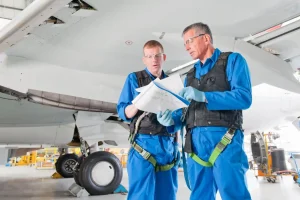
Maintenance oversight is another area of divergence. Many regions use frameworks similar to Part 145 maintenance regulations, yet the depth of inspection and audit frequency can vary depending on regulatory staffing levels. Countries with limited inspector resources may rely more on documentation review than on-site surveillance.
Infrastructure and Air Traffic Management Gaps
Global safety standards assume certain infrastructure capabilities. Advanced navigation systems, radar coverage, and communication networks support safe operations. In regions with strong investment, these systems enhance safety margins significantly.
The United States has modernized air traffic control through programs under the FAA, while Europe advances its SESAR initiative under the EU framework. These projects integrate satellite navigation and digital communication tools. They reduce congestion and improve situational awareness for pilots and controllers.
In parts of Africa and South America, infrastructure constraints remain more visible. Some areas still depend on older radar systems or limited controller staffing. The standards may match ICAO requirements, but the technology behind them may not be equally advanced.
Regional cooperation has helped bridge gaps. Shared oversight bodies and pooled technical resources allow smaller nations to meet global safety standards more effectively. Still, infrastructure disparities continue to shape regional safety performance.
Enforcement Culture and Compliance Differences
Regulation is not only about written rules. It is also about enforcement culture. Some authorities adopt a risk-based oversight model. Others rely more on prescriptive inspections and strict procedural compliance. In North America and Europe, performance-based regulation has become common. Regulators focus on system effectiveness rather than simple checklist compliance. Airlines are expected to prove that their safety systems work in practice.
Cultural attitudes toward reporting also vary. In regions with strong Just Culture frameworks, pilots and engineers are encouraged to report errors without fear of punishment. This improves data quality and supports proactive risk management. Economic and political pressures also influence enforcement. In countries where airlines are state-owned, regulators may face indirect pressure to balance safety oversight with economic growth goals.
Accident Investigation Standards
When accidents occur, the quality of investigation determines how much the industry learns. Transparent, independent investigations are central to improving global safety standards. In the United States, the National Transportation Safety Board operates independently from the FAA. This separation strengthens public trust and ensures objective analysis. Many European nations follow a similar model, separating investigation bodies from regulatory authorities.
In some developing regions, investigative agencies may have limited funding or technical equipment. Major accidents often require assistance from foreign authorities or manufacturers. While cooperation is positive, limited local capacity can delay safety recommendations and systemic reforms.
Safety Performance and Data Sharing
Modern aviation safety depends heavily on data. Airlines track operational trends, analyze minor incidents, and share information through confidential databases. This allows hazards to be identified before accidents occur.
ICAO promotes global safety performance indicators and encourages data sharing between states. However, transparency levels vary. The United States and Europe often publish detailed safety statistics, building public confidence. Other regions release limited data, sometimes due to legal or political constraints.
Cybersecurity and privacy laws also influence reporting structures. As aviation becomes more digitized, protecting sensitive safety data has become a regulatory priority. Balancing openness with security is now part of global safety standards.
Geopolitics and Safety Alignment
Aviation does not operate outside politics. Sanctions, trade disputes, and diplomatic tensions can disrupt safety alignment. If a country faces sanctions, access to spare parts or manufacturer support may become restricted. That can complicate maintenance compliance.
Bilateral aviation safety agreements help manage cross-border certification and oversight. These agreements allow regulators to recognize each other’s findings. When political relationships are stable, cooperation flows smoothly. When tensions rise, technical processes can slow down. Despite these pressures, safety professionals generally prioritize collaboration. Even during geopolitical strain, technical communication often continues behind the scenes to protect global safety standards.
Industry Influence and Private Audits
Governments are not the only actors shaping safety. Airline alliances and industry associations also set expectations that often exceed minimum regulatory requirements.
The International Air Transport Association runs the IOSA audit program, which assesses operational safety across participating airlines. IOSA certification has become a recognized global quality signal. In many regions, it supplements national oversight and reinforces global safety standards.
Private audits do not replace regulators. But they add another layer of scrutiny, especially in markets where government resources may be stretched.
Challenges to Harmonization
True global harmonization remains complex. Resource imbalances are a major factor. Wealthier regulators can hire specialized engineers, invest in digital tools, and conduct frequent inspections. Smaller authorities may struggle with staffing and funding.
Rapid technological innovation adds pressure. New aircraft designs, unmanned systems, and advanced air mobility platforms require fresh certification frameworks. Coordinating these frameworks across regions takes time and negotiation.
Environmental regulation also intersects with safety oversight. Carbon reduction initiatives and sustainable aviation fuel adoption introduce technical adjustments that regulators must evaluate carefully. Aligning environmental and safety goals will shape the next evolution of global safety standards.
The Future of Global Aviation Safety
Looking ahead, collaboration will remain essential. Strengthening ICAO’s coordination role could improve transparency and encourage consistent audit follow-up. Digital oversight platforms may help regulators share real-time safety data more efficiently. Capacity building in developing regions is equally important. Training programs, inspector exchanges, and technical partnerships can reduce oversight gaps. Sustainable regulatory independence strengthens long-term safety performance. Complete uniformity may never be fully achievable. Regional realities, political systems, and economic differences will continue to shape implementation. Yet the shared commitment to global safety standards remains strong.